
An AI employee is an AI system that permanently takes on a defined task within a company — with a specified role, fixed permissions, and a responsible person it works for. Unlike a chatbot it doesn’t wait to be asked, and unlike conventional automation it doesn’t merely follow a rigid rule set: it watches an ongoing state of affairs and reports or acts when something comes due. The terms “digital worker” and “digital colleague” are used synonymously.
The term is new and used inconsistently. What follows describes what distinguishes it from adjacent concepts — and which questions to settle before deploying one.
AI employee, chatbot, AI agent, RPA: the differences
| Trigger | Scope | Persistence | Typical question | |
|---|---|---|---|---|
| Chatbot | A user question | Answering, information | Session ends with the conversation | “What do you know?” |
| RPA / automation | A fixed trigger | Predefined sequence of steps | Runs until something changes | “Execute X” |
| AI agent | An assignment | Multi-step task, own intermediate decisions | Ends with the assignment | “Complete this task” |
| AI employee | A state in the system | Responsibility for an area | Ongoing, with role and permissions | “Keep an eye on this” |
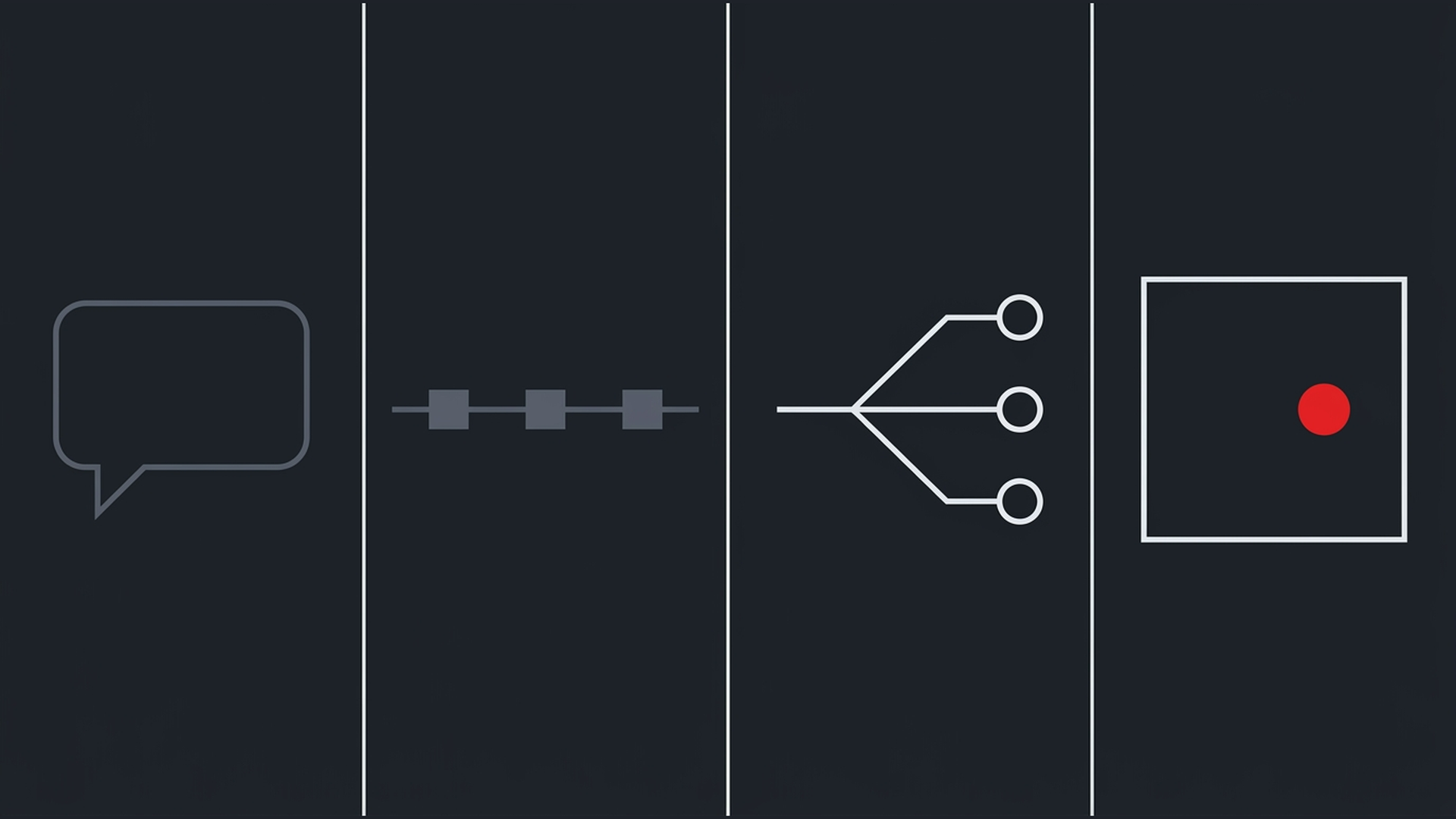
The practical difference is organisational more than technical. An AI agent receives an assignment and is then finished. An AI employee holds a responsibility: it notices by itself that a record expires in six weeks, that a process hasn’t been updated in a year, or that a newly filled role still has mandatory training outstanding — and says so without being asked.
That persistence is the actual benefit. The work that most reliably gets dropped in companies isn’t the difficult work, it’s the recurring work that belongs to nobody.
What separates an AI employee from a tool
Four characteristics separate the category from a feature in a piece of software:
A role
It is responsible for something specific, not for everything. The scope can be described like a job description.
Permissions
It has defined access — no more and no less. Which data it may see and which actions it may take is specified and verifiable.
A responsible person
It works for someone. That person remains accountable for the outcome; a digital colleague doesn’t replace responsibility, it relieves the load on it.
Traceability
What it did is logged: when, on what basis, with what result.
Where one of these four is missing, what you have is automation with an AI component rather than an AI employee — which can be entirely fine, but raises different questions.
The decisive question: what permissions should an AI employee have?
This is where serious implementations separate from careless ones — and the question that, in practice, is least often settled up front.
A system running continuously inside a company needs access. That access is precisely the risk. Three principles have proven sound:
Three principles
- Permission intersection — A digital colleague may never see or do more than the person it works for. Its access is the intersection of what is technically possible and what the responsible person is permitted. No new access layer is created that bypasses existing permissions.
- Fail-closed — When in doubt, nothing happens. If information is unclear or a permission is missing, the process stops and is submitted for review — rather than the system making a plausible assumption and continuing. A system that acts when in doubt is dangerous exactly when it matters most.
- Audit trail — Every action is logged and attributable to a basis. This isn’t only a compliance requirement; it’s the precondition for building trust, because you can check why something happened.

A fourth point belongs here but is often overlooked: escalation without self-repair. A system that silently corrects its own mistakes obscures the trail. It’s better for it to report deviations and hand them to a person.
Where AI employees realistically help — and where they don’t
The benefit is greatest for tasks sharing three properties: they recur, they have no clear owner, and their failure is noticed late. Deadline monitoring, completeness checks, reminders about records, flagging stale documentation.
Less suitable are tasks where judgement is the core of the work: personnel decisions, assessments of people, anything with significant consequences for individual employees. Not because it’s technically impossible, but because responsibility should stay with a person and the legal requirements in that area are strict.
Anyone deploying AI employees in an HR context should settle the data protection and employment law framework in advance — in Germany this regularly includes works council involvement. That isn’t a formality; it often determines whether a deployment is viable at all.
How to introduce AI employees sensibly
Start with a task, not a platform
The most obvious candidate is the task that regularly gets dropped and whose failure has already caused trouble once.
Describe the role before configuring the system
What is the digital colleague responsible for, what explicitly not, who does it work for, and what happens when something is unclear?
Derive permissions from the person, not the system
Not “what can the tool do” but “what is the person it works for allowed to do”.
Let it report before letting it act
Starting with a digital colleague that only raises flags is low-risk and quickly shows whether its judgement is any good.
AI employees at Kollegia
Kollegia implements the concept under the name Digital Colleagues: nine named colleagues, each with their own area of responsibility — among them Antoine for competence and onboarding, Lars for processes, Lena for knowledge and Marco for quality management. They keep track of deadlines, records and currency, and work for the responsible manager. The three principles described above — permission intersection, fail-closed and audit trail — are not optional; they are the basis of the implementation.
An overview of the individual digital colleagues and their responsibilities is on the Digital Colleagues page.
FAQ
Source: Section 87 Betriebsverfassungsgesetz (BetrVG) – co-determination rights, German Federal Ministry of Justice.
An AI employee is an AI system that permanently takes on a defined task, with a specified role, fixed permissions and a responsible person it works for. It doesn’t wait for a request; it watches an ongoing state of affairs and reports when something comes due.
A chatbot responds to questions and ends with the conversation. An AI employee holds ongoing responsibility for an area and is triggered by a state in the system rather than a user question. It speaks up without being asked.
An AI agent handles an assignment and is then finished. An AI employee holds a continuing responsibility with a role and permissions. The difference is organisational rather than technical.
Permission intersection has proven sound: never more rights than the person it works for. Alongside that come fail-closed behaviour — when in doubt, nothing happens — and a complete audit trail across all actions.
That depends on the purpose and the data processed, and can’t be answered in general. The decisive questions are the usual ones: which personal data is processed, on what legal basis, who has access, and how long data is retained. In an HR context in Germany, works council involvement is regularly required as well. Settle this with the relevant parties before deploying.
In the form described here they mainly take on work that currently belongs to nobody and therefore gets dropped — deadline monitoring, completeness checks, reminders. Responsibility for decisions stays with people; that isn’t a concession, it’s what makes the model hold up.